Most of the chemical wash enquiries we receive at AC Service Pro Cheras come from first-time customers who are a little unsure about the process. Is the technician going to dismantle my aircond? How messy will it be? How long will they be inside the house? Can it really be done without ruining the wallpaper?
Those are fair questions. This guide walks you through the entire job from the first WhatsApp message to the final commissioning test, so you know exactly what to expect before you book.
Before We Arrive
When you WhatsApp us, we ask for the unit HP rating, the brand, the approximate age, and any symptoms you have noticed. This helps us decide whether we need to bring extra refrigerant, spare parts, or a cassette-specific tool kit.
On service day, your assigned technician will message you 15 to 30 minutes before arrival. Plan for about 60 to 90 minutes per 1.0 to 1.5 HP wall unit. If you have booked a full house of three or four units, it is closer to half a day.
A Note on Condo Appointments
If you live in one of the newer high-rises around Cheras, please check the JMB rules for contractor working hours before booking. Most condominiums limit noisy work to 9 AM through 5 PM on weekdays. Our team is used to working around those rules, but knowing the building’s policy in advance lets us pick an arrival slot that keeps management happy.
We also bring our own access card and worker ID if required for entry. Just tell us which building you are in when you book.
Step 1: Protection and Power Isolation
First job after we take off our shoes at the door is laying down drop sheets around the indoor unit. Chemical wash involves water, cleaning solution, and removed components, and none of that should touch your floor or furniture.
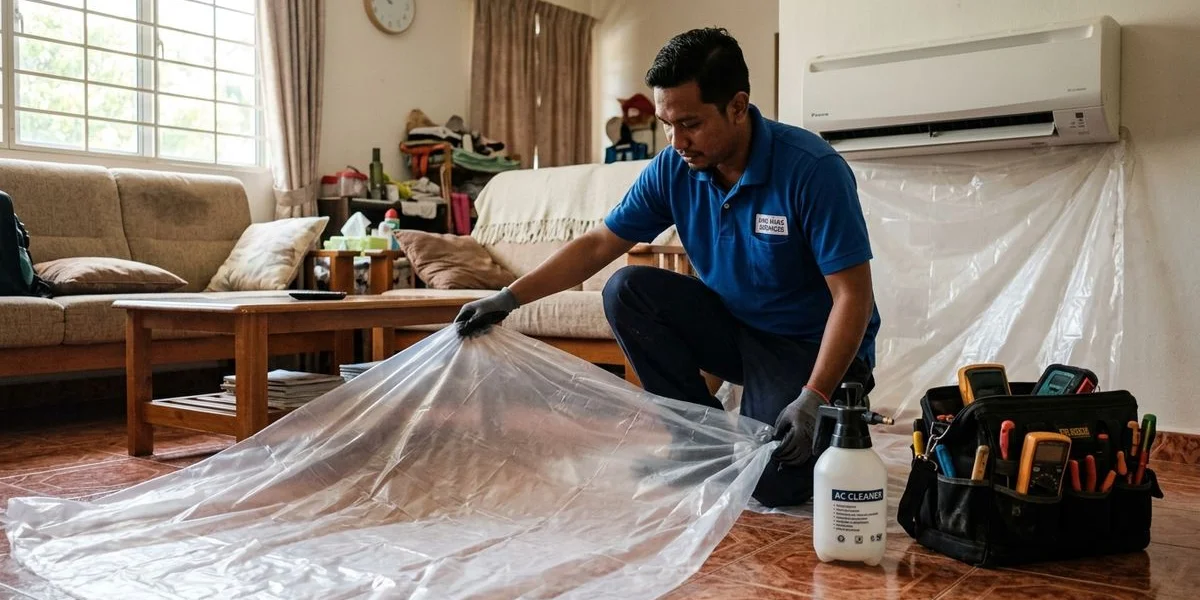
Power gets switched off at both the wall plug and the circuit breaker. Redundant, but necessary. We never start taking parts off an aircond without confirming the breaker is open.
Step 2: Dismantling the Indoor Unit
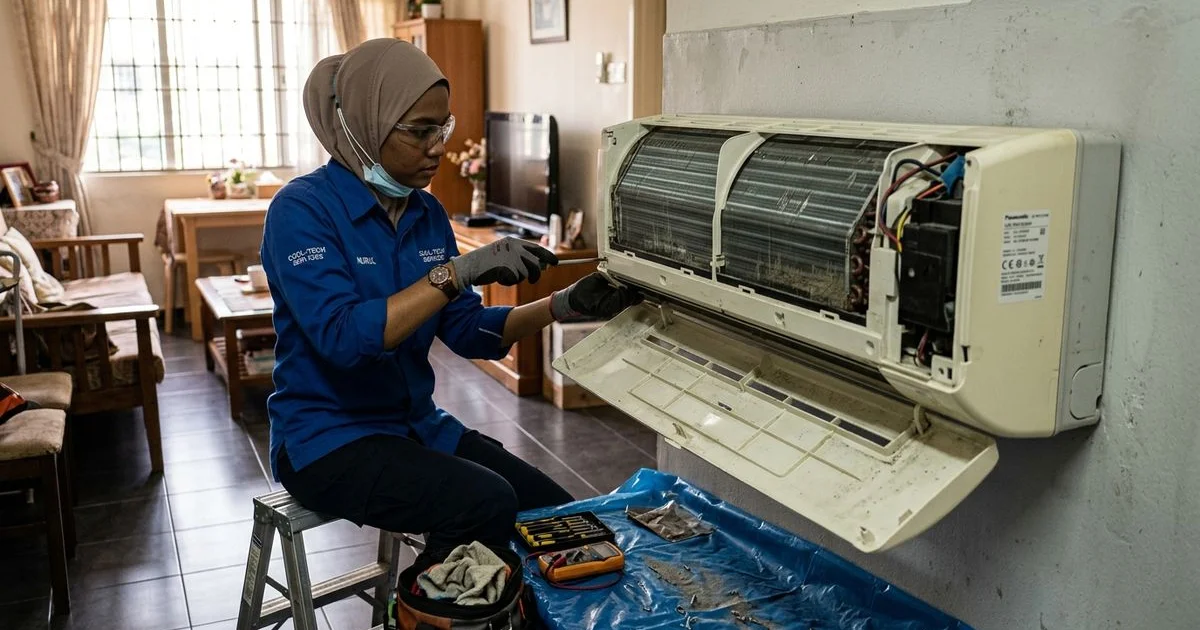
This is where chemical wash diverges sharply from a standard cleaning. We do not just rinse the filter. The whole indoor unit comes apart:
- Front cover and filter removed
- Display ribbon cable disconnected
- Blower fan pulled out (the long horizontal barrel behind the grille)
- Evaporator coil exposed
- Drain pan detached
Every screw, clip, and small part goes into a labeled container. On older Daikin or Panasonic units, losing one clip can mean a trip to the supplier, so we are careful.
Step 3: The Chemical Bath
Blower, coil, and drain pan go into a non-corrosive alkaline cleaning solution. This is the part that actually removes the biofilm, the sticky layer of dust, mould, and bacteria that has built up inside the fin gaps over months of running in Cheras humidity.
While the components soak, the technician works on what stays mounted to the wall:
- Vacuuming dust out of the housing
- Wiping down the electrical compartment
- Inspecting copper piping and flare connections for leaks
- Checking the drain line for sludge or blockages
The bath is what actually restores performance. You cannot clean biofilm out of coil fins with a cloth because the gaps are too narrow. It takes a chemical solution to dissolve it.
Step 4: High-Pressure Flush
Once the chemistry has done its work, the components come out of the bath and get hit with a high-pressure water sprayer. The grey water running off is usually the most dramatic part of the job, because it shows exactly what your unit was recirculating into the air you breathe.
In a typical Cheras condo unit that has been running for 12 months, the water starts out nearly black. By the end it runs clean.
Step 5: Sanitisation
Clean is not sterile. After rinsing, we apply an antibacterial sanitising spray to every cleaned surface, killing the remaining mould spores and bacteria that cause the musty smell many customers complain about. For households with young children or pets, we can switch to a non-toxic formulation on request.
Step 6: Reassembly
Every component goes back in reverse order:
- Drain pan reinstalled and levelled
- Evaporator coil refitted
- Blower fan back in the correct orientation
- Display panel reconnected
- Front cover clipped on
- Clean filter inserted
This is the step where attention to detail matters most. A blower installed slightly off-centre creates vibration noise. A drain pan set at the wrong angle causes water leaks. We have seen plenty of units that dripped for years because someone reassembled them sloppily after a previous wash.
Step 7: Free Gas Top-Up If Needed
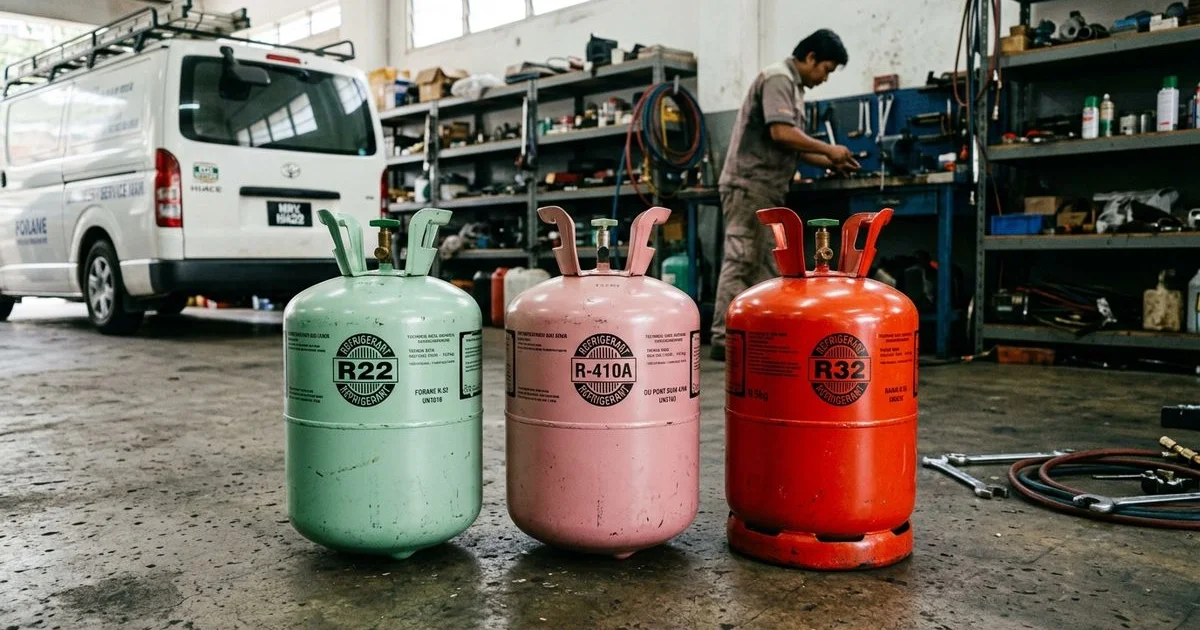
Every chemical wash from AC Service Pro Cheras includes up to 10kg of refrigerant top-up at no extra charge. We attach gauges to the service ports, read pressure against manufacturer spec, and recharge if needed. R22, R410A, or R32, whichever your unit takes.
This step alone normally costs RM80 to RM250 if booked separately. Including it in the wash is part of what makes the deep clean worth the price.
Step 8: Commissioning Test
Before we leave, we run the unit for at least ten minutes on Cool mode and verify four things:
- Temperature: vent air should be 15 to 17°C
- Airflow: noticeably stronger than before the wash
- Drainage: water flowing cleanly to the outdoor drain outlet
- Sound: no rattles, buzzing, or whistles from the reassembly
If anything is off, we adjust or redo that part of the job before we walk out.
What You Should Feel Afterwards
Most customers notice the change immediately:
- Colder air at the vent, typically 2 to 4°C colder than before
- Stronger airflow reaching further into the room
- The musty startup smell disappears
- Lower electricity bill over the next month as the compressor runs shorter cycles
We have seen 15 year old wall splits perform like new machines after a proper overhaul. The mechanical parts are usually fine. What wears them out is running dirty.
Book Your Slot
If your unit is due for a deep clean and you are anywhere in Cheras, WhatsApp us at 016-636 6769. We will confirm a fixed price (from RM160 for a 1.0 to 1.5 HP wall split) and schedule a visit within 24 hours.
More details on our full chemical wash service and our transparent pricing.