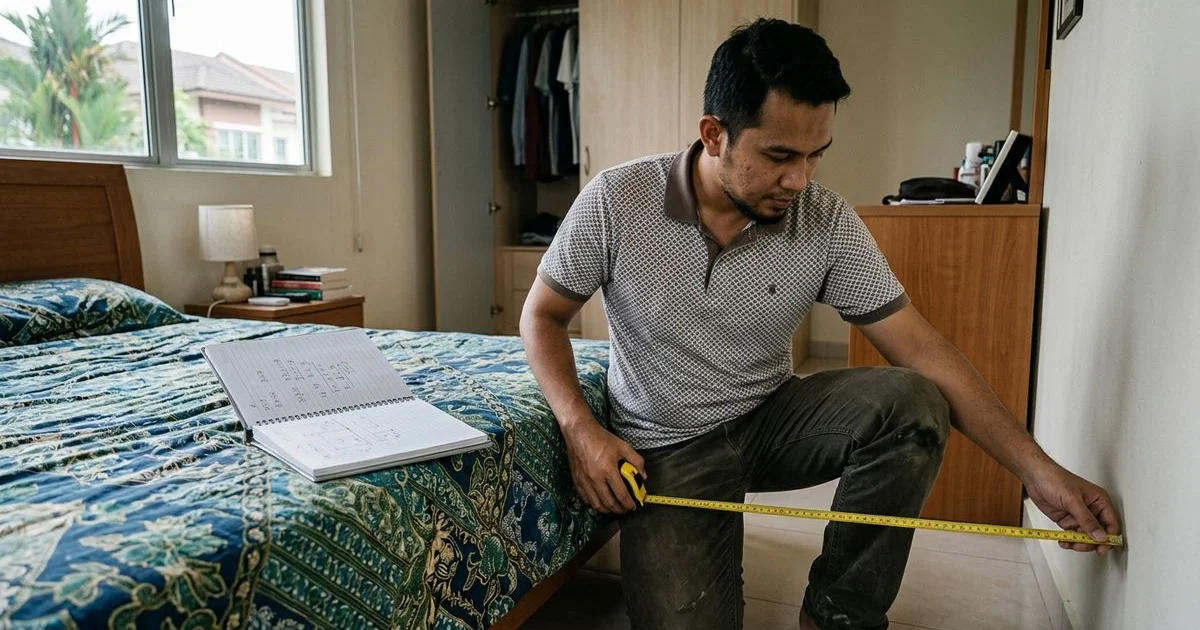
Walk through any new high-rise handover in Cheras and you will hear the same nervous question from first-time owners: “How many HP should I buy for this room?”
It is a fair question. A mis-sized unit burns electricity for the next decade, and the box on the showroom shelf rarely tells you the full story.
Our team at AC Service Pro Cheras spends a lot of time walking clients through this exact decision, from Taman Connaught student rentals to Taman Segar semi-Ds. The calculation itself is simple, but most homeowners miss two or three variables that push them into the wrong tier.
This guide gives you the math, the local adjustments, and a room-by-room reference so you can buy once and forget about it.
HP Is Marketing, BTU Is Physics
Horsepower is the shorthand shoppers use. British Thermal Units (BTU) are what actually determine whether your room cools in fifteen minutes or fifty.
Two different “1.0 HP” units from competing brands can differ by 600 BTU per hour. That gap is the difference between comfortable sleep and a compressor that never stops running.
Always check the data plate on the indoor unit before buying. Here is the rough conversion our technicians rely on:
- 1.0HP: 9,000 to 9,500 BTU/hour
- 1.5HP: 12,000 to 12,500 BTU/hour
- 2.0HP: 18,000 BTU/hour
- 2.5HP: 22,000 to 24,000 BTU/hour
- 3.0HP: 27,000 to 30,000 BTU/hour
How Cheras Climate and Buildings Shift the Math
Generic BTU calculators assume a polite 26°C outdoor day. Cheras regularly sits at 32 to 34°C with humidity pushing past 85 percent after the afternoon thunderstorms roll in from MRR2.
That changes the baseline. A textbook formula says multiply square footage by 60 BTU for tropical climates. Our rule is closer to 65 BTU for anything west-facing or sitting above the fifth floor, because high-rise units in developments like Arte Cheras and M Vertica catch direct afternoon sun with nothing to block it.
Condo owners also need to factor in the strict JMB working-hour rules. If a technician can only run pipe work between 9 AM and 5 PM on weekdays, you cannot afford to redo the installation because the first unit was undersized.
Factors That Push You Up One Tier
- West-facing windows: Add 15 percent. Most high-rises along Jalan Cheras have large floor-to-ceiling glass.
- Ceiling above 3 metres: Add 15 percent for the extra air volume.
- Open-plan kitchen attached: Add 4,000 BTU for the spillover heat.
- More than two regular occupants: Add roughly 600 BTU per extra person.
- Top-floor unit under a concrete roof slab: Add 10 percent.
When You Can Safely Size Down
- Thick double-brick walls in older landed homes around Bandar Tun Razak.
- North-facing bedrooms shaded by neighbouring blocks.
- A good ceiling fan running in tandem (worth about 10 percent).
- Guest rooms used only on weekends.
Room-by-Room Reference for Typical Cheras Homes
Bedrooms
Sleeping spaces punish oversized units. A 1.5HP unit in a small 90 square foot room will cool the air in four minutes, shut off the compressor, and leave the room clammy for the next fifteen. Size to match, and use an inverter for quieter night operation.
- Single room, 80 to 120 sq ft: 1.0 HP
- Master room, 150 to 200 sq ft: 1.5 HP
- Oversized master with walk-in wardrobe, 220 to 280 sq ft: 2.0 HP
Living Halls
The tricky part about halls is traffic. Every time the front door opens, hot corridor air spills in. We often recommend two smaller units rather than one large ceiling cassette in condo layouts.
- Condo lounge, 120 to 180 sq ft: 1.5 HP
- Terrace living area, 200 to 280 sq ft: 2.0 HP
- Open plan, 350 to 500 sq ft: Two 1.5 HP units at opposite ends
- Double volume, 500+ sq ft: Ceiling cassette or VRF
Home Offices
A room with two monitors, a desktop tower, and a router generates surprising heat. Undersized offices are one of the most common compressor failures we replace. For anything bigger than a laptop setup, go 1.5 HP.
What About Ceiling Cassettes?
For halls larger than 300 square feet or wider than 18 feet, a four-way ceiling cassette distributes air more evenly than a single wall split. They are the right call for the open-plan serviced apartments common in Platinum Mira and similar new high-rises.
The tradeoff is cost and installation complexity. Cassettes need a false ceiling cut-out, a condensate pump, and proper drainage routing. Budget noticeably more than a standard wall split job.
Local Installation Tip: Plan for the Compressor Yard
Every condominium in Cheras has a designated yard space for the outdoor compressor. Facade modifications are not allowed under DBKL bylaws, and building management will make you redo any unit hung outside that zone.
Before buying, measure the yard area and check how many compressors it can hold. We have seen owners in Bandar Sri Permaisuri discover too late that their yard only fits three outdoor units, forcing them to rethink a four-bedroom installation.
The Three Most Expensive Sizing Mistakes
| Mistake | Why It Hurts | The Fix |
|---|---|---|
| Buying the biggest unit “just in case” | Short cycling, clammy air, early compressor wear | Trust the math. Match BTU to the actual room. |
| Forgetting the west sun | Unit never reaches setpoint on hot afternoons | Add 10 to 20 percent for west-facing rooms |
| Skipping the ceiling height check | Cold air pools below, sensor reads warm, compressor runs forever | Add 15 percent for anything above 3 metres |
Book a Free On-Site Assessment
If you would rather have someone measure and calculate for you before committing, send us the room dimensions, window orientation, and ceiling height. We will come back with a fixed quote and the right HP recommendation from Daikin, Panasonic, or Mitsubishi.
You can WhatsApp us at 016-636 6769 or read more about what we cover in our aircond installation service page.
Buy the right size once. Your electricity bill and your compressor will both thank you.